



In today’s digital landscape, startups recognize the immense value of organic search traffic in driving conversions and establishing a strong online presence. By optimizing their websites and content to rank higher in search engine results, startups can attract a steady stream of valuable organic traffic, increasing their visibility among potential customers. However, achieving effective SEO results requires more than just strategic planning; it also necessitates allocating a well-calculated budget.
Instead of providing exact numbers about SEO cost (this is useless as every case is unique, and even similar products in the same industry might need completely different efforts to get promoted organically), this article aims to explain what might influence the budgets for their organic presence. Additionally, we will explore the correlation between timelines and budgets, investigating whether allocating more budget and resources can expedite ranking results. Furthermore, we will delve into the different types of SEO teams, such as in-house, agency, and freelance, examining their associated costs, benefits, and more… So let’s begin!
SEO Cost Factors

To effectively calculate an SEO budget for a startup’s organic presence, it is essential to consider several key factors influencing the overall cost.
SEO Strategy
The complexity of the SEO strategy directly impacts the budget. Factors such as keyword research and expansion, ongoing competitor analysis, advanced technical optimizations, rich snippet elements implementation, content creation and distribution, backlinks’ authority level, and continuous monitoring all require additional resources and expertise, leading to an increased budget allocation.
Level of Competition
The level of competition within a target market plays a significant role in determining the SEO budget. In highly competitive markets, achieving organic search success requires more aggressive optimization efforts and ongoing maintenance to surpass competitors. This can result in additional costs. It can be frustrating to invest a substantial budget and effort into SEO only to find that Google may not recognize your content as superior or more valuable than what competitors offer. Despite doing everything right, intense competition will make it challenging to achieve the desired results.
Product Versatility and Assortment (Semantic Core)
The versatility of their product directly influences the number of keywords a startup aims to target, significantly affecting budget allocation. When a startup has many options (queries) for its target audience to search for its product, the semantic core of keywords expands. It is essential to consider the various features and problems that the product solves, as each of these adds more keywords to the mix.
The depth of keyword research directly influences the creation of additional keyword groups and the development of more landing pages. Consequently, larger websites with numerous pages and intricate site architectures require more time and effort for content creation and optimization to meet SEO requirements. These factors contribute to an overall increase in the SEO cost for startups.
Geographic Targeting and Multilingual Considerations
To effectively execute geographically targeted and multilingual SEO strategies, startups should consider the additional costs associated with localization, translation, and cultural adaptation. This will ensure that their SEO efforts align with their target audience’s specific needs and preferences in each region or language.
Targeting multiple countries with different languages will require creating optimized websites for each language. The number of languages increases the effort and resources needed for effective multilingual SEO implementation. It’s important to note that simply translating content may not be sufficient, as cultural nuances and search behaviors may vary across regions.
However, there is a potential advantage in targeting specific niches in certain countries where local information is scarce. By just translating and optimizing your content for these niches, you may have a higher chance of ranking your local website in top positions due to lower competition rates.
Industry Specifics

When calculating the SEO budget for a startup, it is essential to consider industry-specific factors that can influence the overall cost. Different industries’ unique characteristics and competitive landscapes can significantly impact an SEO campaign’s complexity and resource requirements.
For instance, B2C industries often require more aggressive SEO tactics, resulting in increased costs for extensive keyword research, the creation of multiple commercial landing pages, and a strong technical SEO focus.
On the other hand, B2B sectors typically have more focused keyword lists, and the content should showcase greater sophistication in terms of expertise and authority (EEAT – Expertise, Authoritativeness, Trustworthiness). Additionally, B2B industries may prioritize establishing thought leadership and nurturing relationships, which can impact budget allocation accordingly. But let’s dive into specific industries.
SaaS
In addition to regular SEO expenses, SaaS businesses often require significant investments in graphic content development. This includes creating videos, animations, interface screenshots, and tutorials to showcase their software product effectively. These visual elements play a crucial role in engaging users and explaining the functionalities of the SaaS product.
Moreover, optimizing and publishing this content on the SaaS website is essential. It helps enhance the user experience, provide valuable information, and improve the website’s overall search engine visibility. Additionally, SaaS companies may also consider utilizing specific resources and platforms that allow for product comparisons, collecting feedback, and gathering user reviews, further contributing to the SEO budget.
Enterprise
When it comes to SEO expenses for Enterprise Solutions, the larger scale and complexity of these solutions often translate into higher costs. This is due to the need to target multiple buyer personas and optimize for industry-specific keywords. Additionally, the nurturing process in enterprise solutions often involves various stages of product acceptance, from informational intent to comparing similar products to choose the best solution in the market.
To cater to each stage of the nurturing process, developing individual strategies for landing page creation, content generation, and distribution through relevant channels is crucial. This ensures that the enterprise solution is effectively promoted to every decision-maker and influencer at every step of their decision-making journey, resulting in higher SEO expenses to accommodate the comprehensive approach required for enterprise-level SEO.
“Special Cases”

Certain industries face challenges achieving organic search success due to high costs and extended timelines. Let’s explore three examples:
In the eCommerce industry, providing comprehensive, valuable, and unique content for product pages can be a significant challenge. With numerous similar pages on the site and competitors’ websites, meeting search engine requirements becomes difficult. Additionally, as the assortment of products increases, the effort required for SEO also escalates, leading to higher costs.
The gambling industry is characterized by strict regulations and intense competition. SEO efforts in this sector aim to establish site authority, manage reputation, and ensure compliance with regulations. As traditional PPC platforms like Google and Bing often restrict gambling-related ads, SEO becomes a crucial avenue for promotion. However, SEO in the gambling industry can be extremely expensive and carries the risk of sudden filtering or blocking of websites, making it a challenging and risky endeavor unless you prepare preventive measures.
SEO efforts for dating sites and adult content face unique challenges due to strong competition and restrictions imposed by search engines and advertising platforms. For instance, keywords related to online dating services often have high difficulty scores (keyword difficulty by Ahrefs above 90), and top-ranking websites like OkCupid and Tinder dominate the search results.
Similarly, adult sites encounter additional hurdles due to regulations and guidelines specific to the adult industry. Staying well-informed about these policies is crucial to ensure compliance and adjust SEO strategies accordingly.
It’s important to note that the costs of SEO in these industries can vary significantly based on factors such as website size, target audience, and competition level. Furthermore, mainstream SEO strategies may not be directly applicable or as effective due to the nature of the content.
While regular SEO agencies can handle various B2C industries, including eCommerce, certain sectors like enterprise and SaaS products require a deeper understanding of marketing beyond just SEO. In the case of hard-SEO industries such as gambling, dating, and adult content, it is advisable to seek out vendors with specific experience in these niches who understand the industry’s nuances. These specialized vendors can help ensure compliance with regulations and maximize the effectiveness of your SEO efforts. However, it’s important to acknowledge that specializing in these niches will likely result in an increased SEO budget due to their unique demands and requirements.
SEO Budget Components

A startup SEO budget comprises several key components essential for a successful SEO strategy. First of all, these components include skilled SEO team expenses. This includes hiring SEO specialists, content writers, and technical experts who can effectively plan and execute the SEO strategy.
Content Creation and Optimization
High-quality content forms the foundation of a successful SEO campaign. By allocating a portion of the budget to content creation, startups can generate engaging, informative, and optimized content that resonates with their target audience. For instance, a well-crafted, SEO-optimized article may cost around $400-$500, while utilizing rewritten content for SEO purposes can be more cost-effective, typically around $100 per article. Consistently publishing a combination of high-quality and satisfactory articles (two per week) could amount to a budget of approximately $2500.
Technical SEO
Investing in technical SEO is crucial to ensure that a startup’s website is search engine-friendly and optimized for crawlability and indexability. This may involve budgeting for website audits, fixing technical issues, improving site speed and performance, implementing structured data markup, and enhancing mobile-friendliness.
When it comes to technical specialists, hiring them hourly is often more cost-effective, as their involvement may not be required continuously. The cost of hiring a skilled developer for technical SEO improvements can range from around $40 to $60 per hour, depending on their expertise and experience.
Link Building and Outreach
Building high-quality backlinks from authoritative websites is a vital aspect of SEO. Allocating a budget for link-building and outreach efforts enables startups to acquire relevant and authoritative links, which can improve organic rankings and increase website visibility.
When it comes to acquiring backlinks, the most effective approach is through natural means. Creating valuable content that resonates with your target audience can lead to organic sharing and references from reputable websites. However, it can be challenging for startups at the beginning of their journey to establish these natural backlinks. In such cases, there are several options to explore:
- One option is leveraging link-building services on platforms like Fiverr and Upwork. These services can help you find professionals who specialize in building backlinks. However, it’s important to exercise caution and thoroughly vet the service providers to ensure they adhere to best practices and avoid any questionable tactics that could harm your SEO efforts.
- Another approach is to consider guest posting. This involves reaching out to relevant websites within your niche and offering to create valuable content for them in exchange for a backlink. The cost of guest posts can vary significantly depending on the website’s authority, niche relevance, content requirements, moderation processes, target audience, traffic, and other considerations. Guest posts can range in price from as low as $5 to as high as $1000 or more.
It’s important to evaluate each link-building approach’s potential benefits and risks carefully. While shortcuts like private blog networks (PBNs) may seem tempting, they can harm your SEO efforts and should generally be avoided. Prioritizing quality over quantity, building genuine relationships, and creating valuable content will yield more sustainable and effective results in the long run.
SEO Tools and Software
Utilizing effective SEO tools and software is essential for conducting keyword research, tracking rankings, analyzing website performance, and monitoring competition. There are two prominent players in the market: Ahrefs and Semrush. Ahrefs offers a Standard plan for $199 per month, while Semrush has a Pro plan for $119.95 per month. You can try both services for free with limited features or sign up for a free trial with full access.
Ongoing Monitoring and Reporting
Allocating a portion of the budget for ongoing monitoring and reporting is essential for startups to track the progress of their SEO efforts effectively. This involves monitoring metrics such as keyword rankings, organic traffic, conversions, and other relevant data points. Fortunately, the main analytics services are free, so the investment required is primarily the time and effort of you and your SEO team.
SEO Cost Comparison for In-House, Outsourcing, and Freelance

In-House SEO
In-house SEO involves hiring and maintaining a dedicated team of SEO professionals within your organization. The cost of in-house SEO can include salaries, benefits, training, and ongoing professional development for the team members. Additionally, expenses may be related to SEO tools, software, and other resources required for effective SEO implementation. While in-house SEO provides greater control and immediate access to the team, it can be a more significant financial investment due to the fixed costs associated with salaries and overhead expenses.
Outsourced SEO
Outsourcing SEO involves partnering with an external agency or SEO firm to handle your SEO needs. The cost of outsourced SEO can vary depending on the scope of work, the reputation and expertise of the agency, and the level of ongoing support required. Outsourcing typically involves a contractual agreement or a retainer fee, which covers the services provided by the agency. Outsourcing SEO can be a cost-effective option, especially for startups that do not have the resources or expertise to build an in-house team. It allows you to tap into the knowledge and experience of professionals without the fixed overhead costs associated with an internal team.
Freelance SEO
Hiring a freelance SEO specialist involves working with an individual contractor who offers SEO services. The cost of freelance SEO can vary depending on factors such as the freelancer’s experience, expertise, and project complexity. Freelancers may charge hourly rates or project-based fees. While freelance SEO can be more budget-friendly than hiring an agency or building an in-house team, it’s important to carefully assess the freelancer’s qualifications, track record, and availability to ensure they can deliver the desired results within your timeline and budget.
Below is an approximate comparison of monthly SEO costs for in-house, outsourcing, and freelance services. Please note that these figures are based on data from job vacancy platforms like indeed.com and glassdoor.com, as well as estimations from our own projects and freelance platforms, such as mentioned earlier, Upwork and Fiverr.
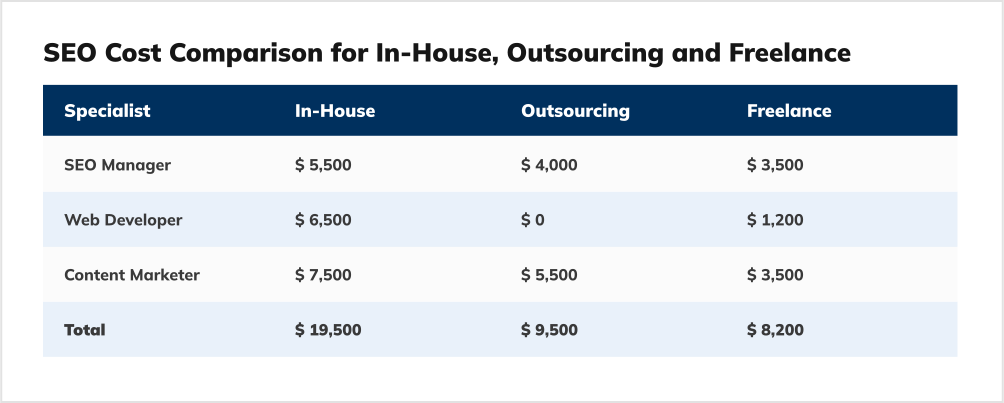
The freelance option is based on hiring specialists hourly, assuming they will dedicate 100 hours to SEO, 30 hours to web development, and 100 hours to content marketing. Regarding cost, the freelance option appears to be the most affordable, although it is not significantly cheaper than the monthly cost of outsourcing. It is important to note that the outsourcing option includes project management and coordination, which are not included in the in-house and freelance options. Therefore, while the freelance option may be more cost-effective, it will require your management involvement.
Instead of Conclusion
This article has discussed the various factors that influence the SEO cost for startups and the options available for SEO implementation. It has shown that the SEO budget depends on the SEO strategy’s complexity, the competition level, the product versatility and assortment, the geographic targeting and multilingual considerations, and the industry specifics. It has also explained the key components of the SEO budget, such as content creation and optimization, technical SEO, link building and outreach, SEO tools and software, and ongoing monitoring and reporting. Additionally, it has compared the costs and benefits of different types of SEO teams, such as in-house, outsourcing, and freelance services.
It is important to highlight that there is a correlation between SEO cost and timelines. The time required to achieve desired SEO results can impact the monthly budget. Having a longer timeline for achieving top rankings in search engine results allows for a more gradual and organic approach to SEO. This means the monthly budget can be spread out over a longer period, resulting in a lower monthly cost. If you have a shorter timeline and want to achieve top rankings quickly, it often requires more aggressive SEO tactics and a higher investment of resources. In this case, you may need to allocate a higher monthly budget to expedite the optimization process.
Based on these factors and components, startups can estimate their monthly SEO cost according to their specific needs and goals. However, it is essential to note that these are only rough estimations and that the actual cost may vary depending on various circumstances. For example, a startup that operates in a highly competitive industry with a versatile product and targets multiple countries with different languages may require a more substantial SEO budget than a startup that operates in a less competitive niche with a focused product and targets a single country with one language.
To give an approximate idea of the monthly SEO cost for startups, we can use the following ranges based on our own experience and data from various sources:
- In-house SEO: More than $20,000
- Outsourced SEO: Around $10,000
- Freelance SEO: Around $8,000
These ranges are not definitive and may change depending on the quality and quantity of the services provided. Therefore, startups should carefully evaluate their options and choose the best suits their budget and expectations. By partnering with a reputable SEO agency, startups can benefit from expert guidance, customized strategies, and efficient implementation that align with their specific goals. Glorium Marketing, a trusted agency specializing in SEO services for startups, is here to help you maximize your online visibility and drive organic growth. Contact us today to discuss your SEO needs, and let us craft a tailored solution that propels your startup toward SEO success!